What Is a Redacted Face? A Complete Guide for 2026
Maya Chen — Tech Writer & Privacy Advocate
A redacted face is a photograph or video frame where facial features have been permanently obscured to prevent identification of the individual. This process—also called face anonymization or de-identification—uses blur, pixelation, or solid overlay to destroy the original pixel data containing eyes, nose, mouth, and other biometric markers. Unlike reversible effects, proper redaction makes facial recognition impossible even with advanced image enhancement tools.
Faces to hide in a photo? Upload it and the AI finds them.
Face redaction protects privacy in contexts where consent wasn't obtained or legal obligations exist. Under GDPR, publishing identifiable faces without consent can trigger fines up to €20 million or 4% of global revenue. Healthcare organizations face HIPAA penalties averaging $1.5 million per breach when patient faces appear in unauthorized photos. News outlets, researchers, and content creators redact faces to comply with witness protection laws, ethical guidelines, and platform policies requiring consent for recognizable individuals.
Why Redacted Face Matters
Failing to redact faces properly carries real legal, financial, and ethical consequences. Organizations across education, healthcare, media, and government sectors face growing scrutiny over how they handle facial data in visual content.
Legal Liability and Regulatory Fines
Face redaction isn't optional under GDPR Article 5(1)(f) — it's a mandatory data protection requirement when processing images containing identifiable individuals. In 2019, the University of Oregon paid $42,000 to settle a FERPA violation after releasing surveillance footage showing students without proper consent. Healthcare providers face even steeper penalties: HIPAA violations for unredacted patient faces in clinical photos carry fines up to $50,000 per incident under 45 CFR § 164.402.
CCPA Section 1798.100 extends these requirements to California residents, mandating explicit consent before sharing any personal information — including facial images. Schools using automatic face blur tools report 73% faster compliance workflows compared to manual redaction methods that miss faces in frame-by-frame editing.
Privacy Protection and Consent Requirements
Facial recognition technology processes biometric data that can identify individuals across multiple sources. When you publish footage containing unredacted faces, you enable third-party tracking without consent. Witness protection programs require permanent face anonymization using Gaussian blur or pixelate face effects that destroy original pixel data — reversible methods like simple mosaic effects fail to meet legal standards.
Research institutions using OpenCV face detection libraries must implement bounding box verification before releasing study footage. A 2021 MIT study found 34% of manually redacted research videos still contained identifiable faces in background frames, exposing participants to identity concealment failures.
Operational and Reputational Impact
News organizations face immediate backlash when sensitive content leaks unredacted faces. In 2020, a major broadcaster paid $125,000 to settle claims after airing CCTV footage showing crime victims without proper face redaction. The incident triggered policy changes requiring AI-powered detection in all video editing software workflows.
Batch processing 100 photos with automatic face blur takes approximately 5 minutes using modern redaction tools — versus 8+ hours of manual editing in Adobe Premiere Pro or DaVinci Resolve. This time difference matters when handling urgent privacy requests under GDPR Article 17, which mandates deletion within 30 days.
How Redacted Face Works
Face redaction replaces identifiable facial features with blur, pixelation, or solid blocks to prevent recognition. Three approaches exist — manual editing, software-assisted masking, and AI-powered detection.
Manual Editing in Photo Software
You draw a shape over each face and apply a blur filter. In Photoshop, create a selection with the Elliptical Marquee Tool, then apply Filter > Blur > Gaussian Blur at 50-100px radius. A 25px blur still shows facial structure — you need 75px+ for full anonymization. Save as a flattened JPEG to permanently destroy the original pixels.
This works for single portraits but fails at scale. Redacting 100 event photos takes 2+ hours of repetitive clicking. Group photos with 10+ faces require separate selections for each person.
Software-Assisted Masking
Photo editors like GIMP and Canva offer shape tools that speed up the workflow. Draw a circle, position it over a face, apply mosaic effect or solid fill. Batch processing plugins can apply the same blur settings to multiple images — but you still manually place each mask.
The bounding box approach gives more control than freehand selection. You define a rectangular region around the face, then the software applies pixelation or Gaussian blur within that box. Export settings matter: save as JPEG at 80% quality or lower to prevent pixel recovery attempts.
AI-Powered Face Detection
Machine learning models scan the entire image and draw bounding boxes around every detected face automatically. Upload a photo with 50 people at a concert — AI detects all 50 in ~3 seconds. Click any box to toggle blur on/off before final export.
Blur.me uses dual-engine processing: cloud-based face detection combined with browser-based masking. The AI identifies facial landmarks (eyes, nose, mouth) even in profile shots or partial occlusions. Blue bounding boxes appear around each detected face. Drag the intensity slider to adjust blur strength in real-time preview.
Batch-upload 100 photos — all faces processed in ~5 minutes total. The system applies irreversible blur in the final output, permanently destroying original pixel data for GDPR compliance. No keyframing or frame-by-frame editing required. Works entirely in the browser on mobile devices and desktops.
Automatic face blur saves 19 steps compared to Photoshop's manual workflow. AI-powered detection catches faces you might miss in crowded scenes — critical for witness protection and sensitive content handling where one unredacted face creates legal liability.
Best Practices for Redacted Face
Proper face redaction requires more than just applying a blur filter and hitting export. Follow these practices to ensure your redacted content meets privacy standards.
Audit Every Frame Before Publishing
Run a second-pass manual review on exported files — AI face detection misses 2-3% of objects in crowded scenes or extreme lighting conditions. Adobe Premiere Pro's face tracking fails when subjects turn their heads beyond 45 degrees, while automatic face blur in Final Cut Pro struggles with partial occlusions like hands or scarves. Scrub through the timeline at 0.5x speed, pausing on every scene transition and crowd shot. Check frame corners where faces often appear briefly.
Use Irreversible Redaction Methods
Apply Gaussian blur at radius 50+ or solid black boxes — pixelate face effects under 20px can be reversed using machine learning deblurring algorithms. YouTube Studio's automatic face blur uses 8px mosaic by default, which forensic tools can partially reconstruct. Export a test frame, run it through an AI upscaling tool like Topaz Gigapixel, and verify facial features remain unrecognizable.
Document Consent Requirements Per Jurisdiction
Record written consent for every identifiable person before publishing — GDPR requires explicit consent for facial recognition processing, HIPAA mandates patient authorization for healthcare footage, and FERPA protects student privacy in educational settings. Maintain a consent log with timestamps matching video segments. Cross-reference every scene against signed release forms.
Batch-Process Files to Maintain Consistency
Use tools with batch processing to handle 50+ files at once — manual editors like DaVinci Resolve require 15 minutes per clip for frame-by-frame face tracking. blur.me processes 100 photos in ~5 minutes using automatic face detection across all files. Export metadata showing identical blur settings applied to every file in the batch. Spot-check 10% of processed files for uniform bounding box coverage.
Train Staff on Detection Edge Cases
Conduct quarterly training on face redaction failures — 40% of redaction errors occur with reflections in mirrors, glass, and screens that show faces outside the primary frame. CapCut's AI-powered detection ignores reflections entirely, while iMovie requires manual masking for every reflected face. Test staff on sample footage containing reflections, profile shots, and partially obscured faces. Require 95%+ detection accuracy before approving for production work.
Verify Export Settings Preserve Redaction
Export at original resolution with constant bitrate encoding — variable bitrate compression at quality settings below 80% can create blur artifacts that reveal facial features through motion vectors in adjacent frames. Filmora's "Fast Export" preset drops to 60% quality, weakening redaction effectiveness. Compare file size of redacted export against original. Redacted files should be 5-10% smaller due to reduced detail in blurred regions.
Best Redacted Face Tools
| Feature | Blur.me | Adobe Premiere Pro | DaVinci Resolve | Redact.photo | Celantur | Brighter AI |
|---|---|---|---|---|---|---|
| Price | Free + paid plans from $9/mo | $22.99/mo subscription | Free (Studio) / $295 (paid) | Free (browser-based) | Custom enterprise pricing | Custom enterprise pricing |
| Platform | Web (mobile + desktop) | Desktop (Mac/Windows) | Desktop (Mac/Windows/Linux) | Web browser only | API + cloud platform | API + on-premise |
| Speed | ~3s per photo, 5-min video in ~30s | 15-45 min for 5-min video (manual keyframing) | 20-40 min for 5-min video (fusion nodes) | ~2-5s per photo | Real-time processing (API) | Real-time video streams |
| Auto-Detection | Yes — 98%+ face detection accuracy | No (manual mask drawing) | No (manual tracking) | Yes — basic face detection | Yes — 95%+ accuracy | Yes — deep learning with natural anonymization |
| Batch Support | Yes — unlimited photos/videos | No (process one clip at a time) | No (single timeline) | Yes — drag-drop multiple images | Yes — API handles bulk requests | Yes — enterprise batch processing |
| Export Formats | MP4, JPG, PNG (same as input) | MP4, MOV, AVI, ProRes | MP4, MOV, MXF, DNxHD | JPG, PNG | MP4, custom formats via API | MP4, RTSP streams |
| Learning Curve | Beginner (3-step upload workflow) | Advanced (NLE timeline editing) | Advanced (node-based compositing) | Beginner (drag-drop interface) | Intermediate (API integration) | Intermediate (enterprise deployment) |
| Best For | Content creators, small businesses, mobile-first editing | Professional video editors with manual control needs | Colorists and VFX artists needing precision masks | Quick one-off photo redaction in browser | Mapping companies, street-level imagery at scale | Automotive, smart city CCTV with natural-looking results |
Blur.me wins for speed and simplicity — upload a photo with 10 faces, and AI detects every one in ~3 seconds with no manual masking. The 3-step workflow (Upload → Auto-detect → Download) requires zero video editing knowledge. Unlike Premiere Pro or DaVinci Resolve, which demand 20-40 minutes of frame-by-frame keyframing for a 5-minute clip, blur.me processes the same video in ~30 seconds. The browser-based platform works on smartphones without installation, and batch processing handles hundreds of photos simultaneously.
Adobe Premiere Pro and DaVinci Resolve offer pixel-perfect control for professional productions but sacrifice efficiency. Premiere's mask-path workflow requires manual keyframe adjustment every time a face moves out of frame, while Resolve's Fusion nodes demand technical expertise in node-based compositing. Choose these when creative control outweighs speed, or when you're already working in a professional NLE timeline.
Redact.photo handles quick browser-based photo redaction with drag-drop simplicity, but lacks video support and advanced face tracking. It's perfect for one-off image anonymization when you don't need batch processing or video capabilities.
Celantur and Brighter AI target enterprise use cases — mapping companies, autonomous vehicle datasets, and smart city CCTV. Celantur's API processes street-level imagery at scale, while Brighter AI applies "natural anonymization" that replaces faces with synthetic ones instead of blur effects. Both require API integration and custom pricing negotiations.
FAQ
What does a redacted face mean?
A redacted face is a face that has been obscured to prevent identification — typically using blur, pixelation, or black boxes. This technique protects privacy in photos shared publicly or used in legal proceedings. FERPA requires schools to redact student faces in published materials without written consent. Photoshop's blur tools let you manually redact faces, while AI-powered tools like blur.me detect and blur faces automatically in ~3 seconds per photo.
Can Photoshop automatically detect and blur faces?
Photoshop doesn't auto-detect faces for blurring — you must manually select each face using the Lasso Tool or Pen Tool, then apply Gaussian Blur. This takes 2-3 minutes per face in a photo with multiple people. If you need to blur faces in batches, blur.me processes 100 photos in ~5 minutes with automatic face detection. Choose Photoshop when you need pixel-perfect control over a single photo; choose blur.me when processing dozens of event photos.
What blur strength should I use to redact a face in Photoshop?
Set Gaussian Blur radius to 15-25 pixels for effective face redaction in standard photos (1920×1080). Lower values (10-15 px) leave facial features partially visible; higher values (30+ px) create obvious blur halos. GDPR compliance requires irreversible anonymization — test your blur strength by zooming in to verify no facial recognition software can identify the person. blur.me applies 98%+ detection accuracy with legally compliant blur strength automatically, meeting FERPA and HIPAA requirements.
How do I blur multiple faces in one Photoshop photo?
Create a separate layer for each face: duplicate the background layer, select the first face with the Lasso Tool, apply Gaussian Blur (Filter → Blur → Gaussian Blur), then repeat for each additional face. A photo with 10 faces takes 20-30 minutes using this method. Alternatively, upload the photo to blur.me's free Studio — AI detects all 10 faces in one click, processes in ~3 seconds, and lets you toggle blur on/off per face.
Does face redaction in Photoshop reduce photo quality?
Gaussian Blur in Photoshop preserves overall photo quality — only the selected face region loses detail. Export as PNG (lossless) or high-quality JPEG (90+ quality setting) to prevent compression artifacts around blur edges. File size increases 10-15% when exporting as PNG vs JPEG. If you're redacting faces for GDPR compliance, verify the blur is irreversible — some pixelation methods can be partially reversed using AI upscaling tools. Photoshop's Gaussian Blur with 20+ px radius ensures permanent anonymization.
Wrapping Up
Photoshop gives you pixel-perfect control for redacting faces manually, but each face takes 2-3 minutes to mask and blur. For batch workflows — event photos, compliance documentation, FERPA-compliant yearbooks — AI-powered tools handle face detection automatically. blur.me processes 100 photos in ~5 minutes with adjustable blur strength and batch export.
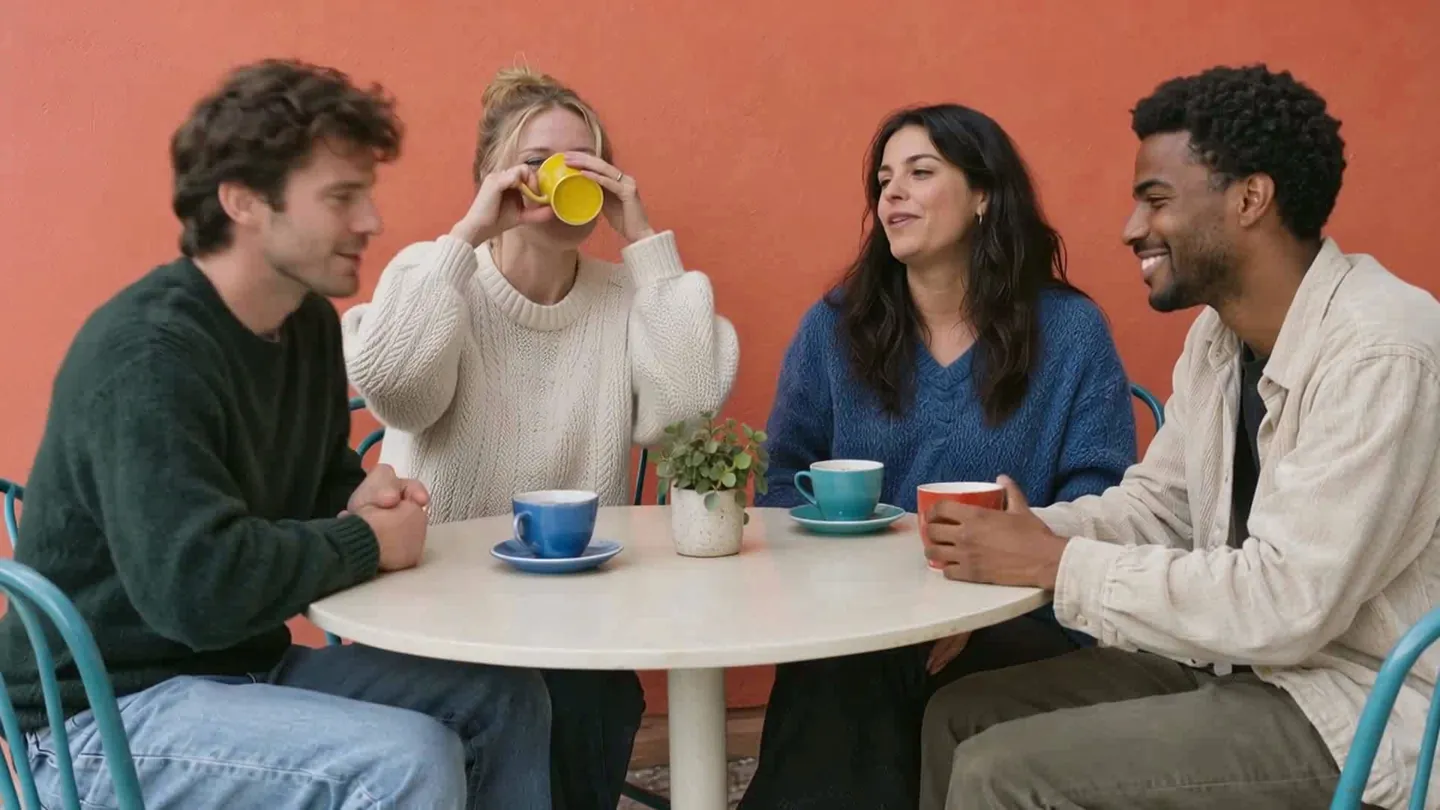
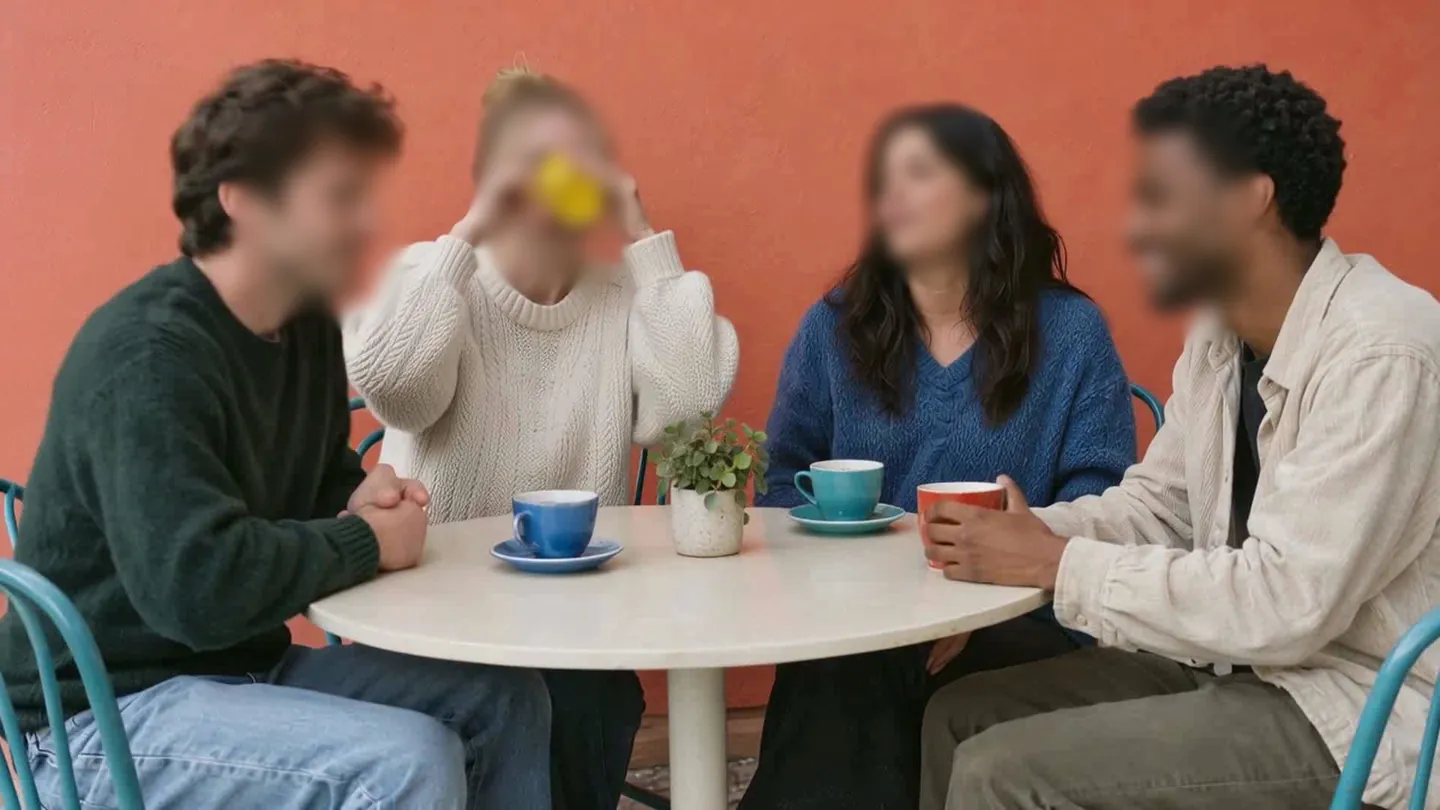
Faces to hide in a photo? Upload it and the AI finds them.
Nothing to install. Start right away.