Top 7 Blur Image Tools to Blur Photos in 2026
Maya Chen — Tech Writer & Privacy AdvocateBlur image tools are essential for anyone who needs to blur photos for privacy, professionalism, or visual focus. From blurring faces in photos to blurring the background of a picture, modern users want fast, accurate, online solutions.This guide covers the top 9 blur image tools in 2026, explains how each one works, and shows why BlurMe’s online AI Blur Image tool is the most complete solution for real-world use.
What Makes a Good Blur Image Tool?
A modern image blur tool should do more than apply a generic blur overlay. The best tools in 2026 offer:AI-powered face and subject detectionBackground blur without cutting out subjectsManual blur tools for specific areasHigh-quality exports (no compression loss)BlurMe was built specifically around these needs.
1. BlurMe – Best Blur Image Tool Overall (AI + Manual Control)
Best for: Blurring faces, backgrounds, objects, sensitive detailsPlatform: 100% online (browser-based)BlurMe is the most advanced blur image tool available in 2026. It combines AI face detection, background blur, and manual blur brushes in one streamlined editor.Unlike apps that rely on filters, BlurMe is designed for real use cases: privacy protection, content moderation, journalism, education, and professional publishing.### How to Blur an Image Using BlurMeOpen BlurMe's Blur Image Studio in your browserUpload your photoEnable AI Blur to automatically detect faces or peopleChoose what to blur:FacesBackgroundSpecific areas like license plates and carsAdjust blur intensity or switch to pixel blurExport your blurred image instantly### Why BlurMe Ranks #1Automatic detection of multiple facesManual brush for precise controlNo software installationDesigned for privacy compliance
Blur image tools are essential for anyone who needs to blur photos for privacy, professionalism, or visual focus. From blurring faces in photos to blurring the background of a picture, modern users want fast, accurate, online solutions.This guide covers the top 9 blur image tools in 2026, explains how each one works, and shows why BlurMe’s online AI Blur Image tool is the most complete solution for real-world use.
You took a photo at a public event. Now you need to share it online — but strangers' faces are visible. You don't have their consent. You don't want to spend 20 minutes masking each face in Photoshop.
Manual blurring wastes time. Miss one face, and you've violated someone's privacy. Use the wrong tool, and the blur is reversible — pixel data still exists in the file. GDPR fines for unredacted photos start at €10 million.
This guide ranks 7 blur image tools by speed, privacy protection, and ease of use. You'll learn which tools apply irreversible blur, which ones handle batch processing, and which platforms work on your device.
#1. Blur.me — Best Blur Image Tools for Automatic Face Detection
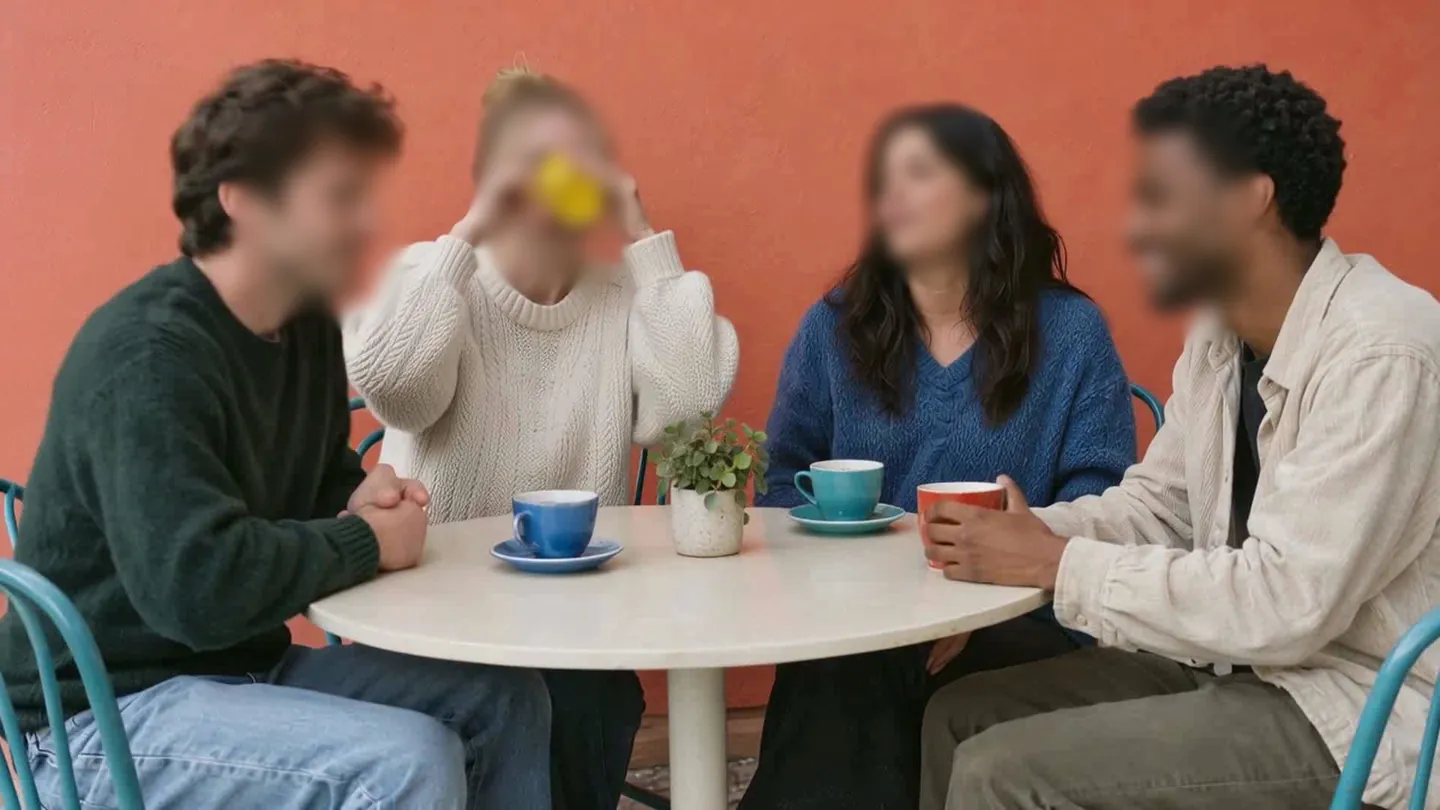
Blur.me detects and blurs faces in photos automatically. Upload an image with 10 people, and AI identifies every face in ~3 seconds. Click any face to toggle blur on or off. No masking, no manual selection.
The tool runs 100% in your browser — no software to install. Works on iPhone, Android, Mac, Windows. Upload a batch of 100 event photos, and the AI processes all faces in ~5 minutes. Each blur is irreversible in the final export — original pixel data is permanently destroyed, meeting GDPR requirements for de-identification.
Blue bounding boxes appear around detected faces the moment you upload. Drag the blur intensity slider from 0 to 100 while previewing changes in real-time. The dual-engine architecture combines cloud processing for large files with WebAssembly masking for instant browser-based edits — no waiting for server uploads.
Pros:
- ✓ 98%+ face detection accuracy even in crowded scenes — in a 50-person group photo, the AI catches faces turned sideways or partially obscured, saving you 15+ minutes of manual review per batch
- ✓ Batch processing for hundreds of photos at once — upload an entire wedding album (200+ images) and process all faces in one click, vs 6+ hours of frame-by-frame editing in traditional photo editors
- ✓ Unblur toggle lets you reverse decisions without re-uploading — if you accidentally blur the bride's face, click it to restore, unlike Photoshop where you'd need to undo 10 steps or reload the original file
Cons:
- ✗ Free version has processing limits — upgrade to premium for unlimited batch sizes and faster cloud processing
Best for: Event photographers, HR teams, educators sharing classroom photos, anyone who needs to blur multiple faces across dozens of images quickly
Price: Free version available at Blur.me Studio. Premium plans start at discounted rates (check pricing page for current offers)
Platform: Web (works on any device with a browser — no app install needed, no storage eaten by a 200MB download)
Verdict: ⭐⭐⭐⭐⭐ 5/5 — fastest path from upload to privacy-compliant export
#2. Photoshop — Best Desktop Software for Selective Image Blurring
Photoshop gives you pixel-level control over blur regions. Use the Lasso Tool to draw a selection around a face, then apply Gaussian Blur from the Filter menu. Adjust blur radius from 1 to 250 pixels to match the level of anonymization you need.
The Blur Tool (not the filter) works like a paintbrush — click and drag to blur specific areas without selecting first. Feather the edges to blend blur smoothly into surrounding pixels. For license plates or logos, duplicate the layer, apply blur, then mask out everything except the target region. This workflow takes 2-3 minutes per object in a single photo.
Pros:
- ✓ Layer masks let you refine blur edges non-destructively — if you blur too much background, reduce mask opacity to restore detail without re-applying the filter
- ✓ Multiple blur types (Gaussian, Motion, Radial) for creative effects — use Radial Blur on a car's wheels to simulate motion, or Motion Blur to obscure text direction
- ✓ Smart Object support preserves original pixels — apply blur to a Smart Object layer, and you can adjust blur radius later without quality loss
Cons:
- ✗ No automatic face detection — you manually select every face, which takes 5-10 minutes for a group photo with 15 people
- ✗ Costs $22.99/month (Photography Plan) — budget $276/year for a tool you might only use occasionally for privacy tasks
Best for: Professional photographers who already own Photoshop and need artistic blur control (bokeh effects, selective focus) beyond simple privacy redaction
Price: $22.99/month (Photography Plan includes Lightroom)
Platform: Desktop (Mac/Windows)
Verdict: ⭐⭐⭐⭐ 4/5 — powerful but slow for batch privacy work
#3. Pixlr — Best Online Tool for Quick Browser-Based Blurring
Pixlr runs entirely in your browser with no account required. Open Pixlr Express, upload your photo, and click the Blur tool icon. Paint over faces, license plates, or backgrounds — blur applies instantly as you drag. Adjust blur strength with a slider (0-100%) and feather edges to avoid harsh transitions.
The tool saves your work automatically to browser cache. Export as JPG or PNG when done. For batch jobs, you'll need to process each image individually — Pixlr doesn't support multi-file uploads. A 10-photo batch takes ~15 minutes of repetitive upload-blur-export cycles.
Pros:
- ✓ Zero setup friction — no email signup, no download, works on any device with a browser including Chromebooks and tablets
- ✓ Intuitive brush-based interface — if you've used any paint app, you already know how to blur with Pixlr (drag to blur, release to stop)
- ✓ Free tier includes all core blur features — no watermarks, no export limits, no premium upsells blocking basic privacy redaction
Cons:
- ✗ Manual painting required for every face — no AI detection, so you spend 3-5 minutes per photo identifying and covering each person
- ✗ No batch processing — uploading and exporting files one at a time makes this impractical for event albums or compliance workflows with 50+ images
Best for: Casual users who need to blur 1-2 photos occasionally (social media posts, online listings) and don't want to install software
Price: Free (ad-supported). Pixlr Premium removes ads for $4.90/month but doesn't add batch features
Platform: Web (any modern browser)
Verdict: ⭐⭐⭐½ 3.5/5 — solid for single-image jobs, tedious for volume work
#4. Snapseed — Best Mobile App for On-the-Go Photo Privacy
Snapseed is Google's free photo editor for iOS and Android. Open a photo, tap Tools → Selective, then place a control point on the face you want to blur. Pinch to expand the selection area, then reduce Structure to -100 and Sharpness to -100 — this creates a soft blur effect. Repeat for each face in the photo.
The app saves edits non-destructively. Export as JPG or share directly to Instagram, WhatsApp, or email. For backgrounds, use the Lens Blur tool to simulate depth-of-field bokeh. Processing a 5-person group photo takes ~4 minutes of tapping and adjusting control points.
Pros:
- ✓ Completely free with no ads or in-app purchases — Google funds it as a value-add to the Android/iOS ecosystem, so you get professional-grade tools at zero cost
- ✓ Works offline after initial install — blur photos on a plane or in areas with no cell service, unlike web tools that require constant internet
- ✓ Non-destructive editing lets you revert any blur — tap View Edits, delete the Selective adjustment, and the original photo reappears without re-importing
Cons:
- ✗ No automatic face detection — you manually place control points on every face, which becomes tedious in group photos with 10+ people
- ✗ Blur quality is softer than true Gaussian blur — the Structure/Sharpness reduction method leaves some edge detail visible, unsuitable for GDPR-level anonymization
Best for: Smartphone users who need quick privacy edits before posting to social media and don't require compliance-grade redaction
Price: Free
Platform: iOS (App Store) and Android (Google Play)
Verdict: ⭐⭐⭐⭐ 4/5 — best free mobile option despite manual workflow
#5. GIMP — Best Free Desktop Alternative to Photoshop
GIMP (GNU Image Manipulation Program) is open-source software with Photoshop-level features. Use the Free Select Tool to outline a face, then apply Filters → Blur → Gaussian Blur. Set blur radius (measured in pixels) — 15-25px works for most face anonymization. Feather the selection edges by 5-10px before blurring to avoid sharp cutoff lines.
For batch jobs, use GIMP's Batch Mode with Python-Fu scripts. Write a script that loads each image in a folder, detects faces (requires installing OpenCV plugin), applies blur, and exports. This setup takes 1-2 hours if you're unfamiliar with Python, but processes 100 photos in ~10 minutes once configured.
Pros:
- ✓ 100% free and open-source — no subscription fees, no feature walls, and the codebase is auditable for security-conscious organizations
- ✓ Plugin ecosystem adds face detection via OpenCV — install the Face Detection plugin, and GIMP can auto-detect faces like commercial tools (requires technical setup)
- ✓ Cross-platform (Windows, Mac, Linux) — works on any desktop OS, unlike Final Cut or Photoshop which lock you into specific ecosystems
Cons:
- ✗ Steep learning curve compared to consumer apps — menu structures and tool names assume Photoshop familiarity, frustrating for first-time users
- ✗ Batch automation requires scripting knowledge — Python-Fu is powerful but not beginner-friendly, and most online tutorials assume coding experience
Best for: Nonprofits, students, and small businesses that need Photoshop-grade tools without the $276/year cost and have time to learn the interface
Price: Free (open-source)
Platform: Desktop (Windows, Mac, Linux)
Verdict: ⭐⭐⭐⭐ 4/5 — unbeatable value if you can handle the learning curve
#6. Canva — Best for Adding Blur Effects to Social Media Graphics
Canva is a graphic design platform with built-in blur tools. Upload your photo to a Canva project, click Effects → Blur Background, and the AI separates foreground subjects from the background. Adjust blur intensity with a slider (0-100). For manual blurring, use the Erase tool to remove parts of the image, then add a blurred rectangle shape over the erased area.
The platform excels at creating Instagram posts, Facebook covers, and Pinterest graphics with stylized blur effects. For privacy redaction, you'll manually position blur shapes over faces — Canva doesn't auto-detect sensitive regions. Exporting a single blurred photo takes ~2 minutes.
Pros:
- ✓ Drag-and-drop interface requires zero learning curve — if you can use PowerPoint, you can blur in Canva within 30 seconds of opening the tool
- ✓ Built-in templates for social media formats — blur a photo and drop it into an Instagram Story template with pre-sized dimensions and text overlays
- ✓ Free tier includes blur effects — no paywall for basic privacy tasks, though premium backgrounds and elements require Canva Pro ($12.99/month)
Cons:
- ✗ No face detection — you manually drag blur shapes over each face, which is imprecise and time-consuming for group photos
- ✗ Blur is applied as a design element, not pixel-level editing — exported files may retain metadata or original pixel data in layers, unsuitable for GDPR compliance
Best for: Social media managers and content creators who need stylized blur for aesthetic purposes (highlighting a product, obscuring a background) rather than strict privacy redaction
Price: Free (basic features). Canva Pro is $12.99/month for advanced elements and templates
Platform: Web (any browser), iOS and Android apps available
Verdict: ⭐⭐⭐ 3/5 — great for design, weak for privacy
#7. Fotor — Best Online Editor for Simple Blur and Mosaic Effects
Fotor combines photo editing with AI-powered enhancements. Open Fotor's online editor, upload your image, and select the Blur tool from the left sidebar. Choose between Tilt-Shift (linear blur), Mosaic (pixelation), or Brush Blur (manual painting). Mosaic mode is useful for license plates — it replaces pixels with colored blocks, making text unreadable.
Adjust mosaic size (small, medium, large blocks) and brush diameter. For faces, paint over the region with the Brush Blur tool. The editor applies Gaussian blur in real-time as you drag. Export as JPG or PNG when finished. Processing a single photo takes ~3 minutes.
Pros:
- ✓ Mosaic effect is more visually distinct than standard blur — in dashcam footage or parking lot photos, pixelated license plates are immediately recognizable as redacted vs accidentally out-of-focus
- ✓ Tilt-Shift blur creates depth-of-field effects — useful for product photography where you want to blur the background while keeping the subject sharp
- ✓ One-click AI enhancements (auto-adjust, HDR) save time — blur a face, then auto-enhance the rest of the photo's colors and lighting without switching tools
Cons:
- ✗ Free version adds watermarks to exports — pay $8.99/month (Fotor Pro) to remove them, which negates the "free online tool" appeal
- ✗ No batch processing or face detection — every face requires manual brush strokes, and you can only edit one photo at a time
Best for: Hobbyist photographers who want creative blur effects (bokeh, tilt-shift) alongside basic privacy redaction and don't mind watermarks on non-commercial work
Price: Free (with watermarks). Fotor Pro is $8.99/month or $39.99/year to remove watermarks and unlock premium filters
Platform: Web (any browser), desktop apps for Windows and Mac, mobile apps for iOS and Android
Verdict: ⭐⭐⭐ 3/5 — versatile but held back by watermarks and manual workflow
How to Choose the Right Blur Image Tool
Match the tool to your workflow volume. Blurring 1-2 photos per month? Use Pixlr or Fotor — free, browser-based, no learning curve. Processing 50+ images weekly for compliance? Blur.me's batch AI saves 10+ hours per week vs manual editors.
Consider platform constraints. Need to blur photos on your phone during a commute? Snapseed works offline. Editing at a desktop with Photoshop already installed? Use layer masks for surgical precision. Working on a Chromebook or library computer? Web tools like Blur.me and Canva run anywhere.
Privacy requirements determine blur type. GDPR and FERPA demand irreversible redaction — original pixel data must be destroyed. Blur.me and Photoshop's destructive filters meet this standard. Canva's design-layer blur and Snapseed's non-destructive edits may not pass legal scrutiny if metadata or edit history preserves unblurred originals.
Blur vs Pixelate: Which Protects Privacy Better?
Blur applies a Gaussian filter that averages neighboring pixels. A blurred face becomes a soft, flesh-toned cloud. Pixelate (mosaic) replaces pixel groups with solid-color blocks. A pixelated face looks like a grid of squares.
Both methods hide identity, but pixelation is harder to reverse. Gaussian blur can sometimes be partially de-blurred using deconvolution algorithms if the blur radius is weak (under 10 pixels). Mosaic effects destroy spatial frequency data entirely — no algorithm can reconstruct the original from large blocks.
For legal compliance, use blur radius of 20+ pixels or mosaic blocks of 15x15 pixels minimum. Blur.me defaults to compliance-safe settings. In Photoshop, manually verify blur strength before exporting — a radius of 5px might still show facial features under enhancement.
Can I Blur Images Without Downloading Software?
Yes. Web-based tools like Blur.me, Pixlr, Canva, and Fotor run entirely in your browser. Upload a photo, apply blur, and download the result — no installation required. These tools work on Chrom
Feature Comparison Table
| Feature | Blur.me | Photoshop | Canva | Facetune | Snapseed | Fotor | Pixlr |
|---|---|---|---|---|---|---|---|
| Price | Free (premium from $9/mo) | $22.99/mo | Free (Pro $13/mo) | Free (VIP $5.99/mo) | Free | Free (Pro $8.99/mo) | Free (Premium $7.99/mo) |
| AI Face Detection | Yes — automatic | No — manual selection | No — manual selection | Yes — portrait mode only | No — manual brush | No — manual selection | No — manual brush |
| Background Blur | Yes — depth-aware | Yes — requires layer masks | Yes — one-click | Yes — portrait auto-detect | Yes — lens blur filter | Yes — tilt-shift effect | Yes — focus tool |
| Manual Brush Control | Yes — toggle individual detections | Yes — full brush suite | Yes — basic brush | Yes — touch-up brush | Yes — selective tool | Yes — blur brush | Yes — blur tool |
| Platform | Web (works on mobile browsers) | Desktop (Mac/Windows) | Web + iOS/Android app | iOS/Android only | iOS/Android only | Web + desktop + mobile | Web + iOS/Android |
| Processing Speed | Fast — 100 photos in ~5 min | Medium — 3 min per photo | Fast — instant preview | Fast — real-time preview | Fast — instant apply | Medium — 10-15 sec per photo | Fast — instant preview |
| Ease of Use | Easy — upload and auto-detect | Hard — requires masking skills | Easy — drag intensity slider | Easy — tap face to blur | Medium — manual brush painting | Medium — select area first | Medium — brush tool learning curve |
| Output Format | JPG/PNG — same as input | PSD/JPG/PNG/TIFF | JPG/PNG | JPG — compressed | JPG — original quality | JPG/PNG | JPG/PNG |
| Learning Curve | 5 min — 3-step workflow | 2-3 days — layer/mask concepts | 10 min — explore presets | 15 min — find face tools | 30 min — selective tool practice | 20 min — navigate menus | 30 min — tool discovery |
| Batch Processing | Yes — unlimited uploads | Yes — requires actions/scripts | No — one image at a time | No — one photo per session | No — single image editing | Yes — up to 10 images | No — single image only |
| GPU Required | No — runs in browser | Optional — faster rendering | No | No | No | No | No |
| Best For | Privacy teams processing event photos with multiple attendees | Professional photographers who already own Creative Cloud | Social media creators making quick Instagram story edits | Portrait selfie touch-ups and beauty filters | Mobile photographers who want precise manual control | Casual users who need occasional blur effects | Hobbyists exploring free web-based editing |
| Winner | 🏆 Speed & Automation | 🏆 Professional Control | 🏆 Simplicity | 🏆 Portrait Auto-Blur | 🏆 Mobile Precision | — | — |
Quick Decision Guide:
- Need to blur 50+ photos fast? → Blur.me (batch auto-detection saves hours)
- Already paying for Creative Cloud? → Photoshop (maximum control, no extra cost)
- Making a social post right now? → Canva (fastest one-click background blur)
- Blurring selfie backgrounds on mobile? → Facetune (auto-detects portrait subjects)
- Want surgical precision on your phone? → Snapseed (best manual brush on mobile)
- Occasional blur for free? → Fotor or Pixlr (web-based, no signup required for basic features)
4. Facetune – Portrait-Based Background Blur
Best for: Selfies, portraitsPlatform: iOS, AndroidFacetune is commonly used for searches like facetune blur background or how to blur on facetune. It focuses on portrait enhancement rather than image redaction.### How Facetune Applies BlurDetects a single main subjectApplies artificial background blurCombines blur with beauty effects### LimitationsNot designed for multiple facesLimited object blurringNot suitable for professional or legal useFacetune is stylistic, not privacy-focused.
5. Snapseed – Manual Blur on Mobile
Best for: Free mobile editingPlatform: iOS, AndroidSnapseed offers blur and lens blur tools that allow users to manually blur part of a picture.### StrengthsFree to useAdjustable blur strengthUseful for simple edits### WeaknessesNo AI detectionManual placement onlySlow for multiple faces or objectsSnapseed works for casual edits but lacks automation.
6. Fotor – Online Blur Tool with Limited Precision
Best for: Quick online editsPlatform: Web, mobileFotor provides background blur and manual blur tools for users who want to blur photos online.### ProsBrowser-basedOne-click background blur### ConsInconsistent subject detectionEdge artifacts around hair and objectsLimited control for face blurringAccuracy varies depending on the image.
7. Pixlr – Manual Blur with Layer-Based Editing
Best for: Users familiar with layered editorsPlatform: WebPixlr offers blur filters, overlays, and brushes similar to Photoshop.### CapabilitiesBlur overlaysManual selection toolsLayer editing### LimitationsNo AI face detectionSlower workflowRequires editing experiencePixlr is flexible but inefficient for fast blurring.
Faces or plates to hide in your photo?
Drop a photo or video in your browser and the AI auto-blurs faces, license plates, and personal info in seconds.
Upload free